Tired of forgetting your travel memories? How I finally stopped losing my trip stories
You know that feeling when you get back from an amazing trip, but weeks later, you can’t remember half of what happened? I used to lose my travel moments—until I found a simple tech habit that changed everything. It’s not about fancy apps or complicated tools. It’s about capturing the journey in a way that sticks. Now, I look back and actually feel those memories again. This is how it transformed my travels—and could do the same for you.
The Trip That Slipped Away
It was one of those trips I had dreamed about for years—a two-week journey through southern Italy, full of winding coastal roads, sun-drenched piazzas, and meals that tasted like home, even though I’d never been there before. I took hundreds of photos, filled a notebook with scribbles, and brought back little bottles of olive oil and hand-painted tiles. But when a friend asked me a few months later, “So, what was your favorite part?” I froze. My mind went blank. I could picture a few scenes—the blue door in Positano, the old man playing accordion in Sorrento—but the magic, the warmth, the laughter… it was gone. I realized I hadn’t lost the photos. I’d lost the story.
That moment hit me hard. I hadn’t just failed to remember. I had failed to truly keep the experience. The souvenirs sat on my shelf. The photos were buried in my phone gallery, lost among screenshots and grocery lists. The journal? Left open on my nightstand, never finished. I thought I was preserving the trip, but really, I was just collecting fragments. The emotion, the quiet moments, the way the air smelled after rain in the hills—those weren’t in any photo. They needed something more. I wanted to feel that trip again, not just see it. And that’s when I decided to stop treating travel like a checklist and start treating it like a story worth telling—especially to myself.
Why We Lose Our Travel Stories
We all do it. We snap a photo of the Eiffel Tower, post it with a heart emoji, and think we’ve saved the moment. But here’s the truth: a photo captures light and shape, not feeling. It doesn’t record the way your child’s eyes widened when they saw the ocean for the first time, or how the local baker smiled when you struggled to order in broken French. Those are the moments that make a trip matter. And they disappear fast—faster than we think.
Studies show that without active recall, we forget up to 50% of an experience within a day. By a week, it’s more like 80%. Our brains aren’t designed to hold onto every detail, especially when we’re in new environments, processing new sights and sounds. And when we rely only on photos or social media, we’re often capturing for others, not for ourselves. We stage shots, filter faces, and end up with a highlight reel that feels distant, even from us.
At the same time, our digital lives are more scattered than ever. Photos live in one app, notes in another, voice memos somewhere in the cloud, and travel itineraries in email inboxes. There’s no single place where the full story lives. So when we try to remember, we’re jumping between devices and platforms, piecing together fragments like a puzzle with missing pieces. The real problem isn’t that we’re bad at remembering. It’s that we’ve never built a way to truly remember in the first place. We’re not preserving memories—we’re just storing data.
Discovering the Power of Progress Tracking
I didn’t set out to build a system. I just wanted to feel my trips again. One evening, while flipping through an old journal, I found a single entry from a weekend in Vermont. It wasn’t detailed—just three sentences about the smell of woodsmoke, the sound of geese flying overhead, and how I finally stopped worrying about work. But reading it, I was there. I could feel the cold air on my face. That’s when it clicked: the emotion wasn’t in the photo. It was in the words.
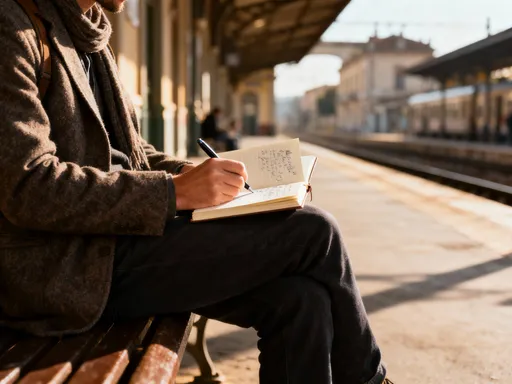
I started experimenting. Instead of just taking pictures, I began writing one short paragraph each night—just three to five sentences about how the day felt. Not what I did, but how it affected me. Did I feel curious? Calm? Overwhelmed? Inspired? I used a simple note-taking app on my phone, with a folder just for travel. Each entry had the date, location, and a few honest lines. No pressure to write well. Just to be real.
Over time, something shifted. I began to notice patterns. On trips where I rushed from place to place, I felt drained. But when I allowed for slow mornings or unplanned walks, I felt more alive. I saw how certain places made me more patient, more present. One trip to Portugal, I wrote, “Felt brave today—asked for directions in Portuguese and didn’t panic when I got it wrong.” That small win stayed with me. The journal wasn’t just recording the trip. It was showing me how I was changing. Travel wasn’t just an escape. It was becoming a mirror.
Building a System That Works Without Effort
The biggest mistake I made at first? I tried to do too much. I downloaded every travel journal app, tried voice-to-text tools, even considered a tiny digital camera. But the more complex it got, the less I used it. I realized the best systems aren’t the fanciest—they’re the ones that fit into real life. So I simplified.
Now, my system has three parts. First, voice memos. When I’m too tired to write, I open my phone’s recorder and talk for two minutes. “Today was hot, but the lemonade from that little stand saved us. The kids laughed so hard they spilled it. Felt like a real family moment.” I save it with the date and location. Later, I can listen while folding laundry or making dinner, and it brings the day back instantly.
Second, a cloud-based note app—something that syncs across my phone, tablet, and laptop. I keep one travel journal per trip, with daily entries. I don’t write every day, but I aim for most days. The key is low pressure. Even two sentences count. I also add a photo or two to each entry—not the perfect shot, but one that means something. A wrinkled train ticket. A napkin with a doodle. These tiny details become emotional anchors.
Third, automatic photo backups. I use a service that backs up all my phone photos to the cloud and organizes them by date and location. Then, once a trip is over, I spend one quiet afternoon going through them—not to edit, but to relive. I pick ten to fifteen that really matter and add them to my journal entries. This ritual turns a chaotic gallery into a story. The whole process takes less than five minutes a day while I’m traveling, and about an hour after I return. And the payoff? A memory that lasts.
How Tracking Changed the Way I Travel
Here’s the unexpected part: once I started recording my trips this way, I began planning them differently. I wasn’t just asking, “Where should we go?” I was asking, “What kind of experience do I want to feel?” I looked back at old entries and noticed something. The trips I remembered most weren’t the ones with the most sights. They were the ones with space—the slow breakfasts, the quiet afternoons, the conversations with locals.
So I started building more of that into my plans. Instead of cramming five cities into ten days, I chose two and stayed longer. I scheduled free mornings. I looked for rentals with kitchens, so we could shop at local markets and cook together. I even started saying no to things that sounded impressive but didn’t feel right—like that overcrowded museum tour that left everyone grumpy.
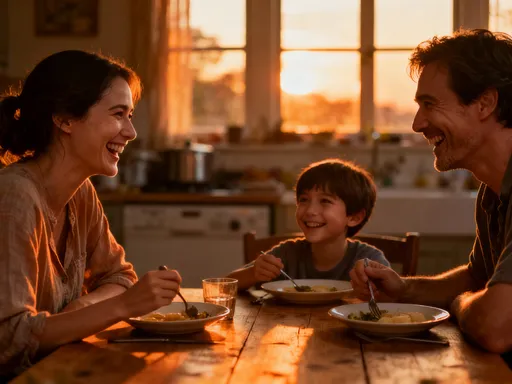
And you know what? The trips became richer. Not because we did more, but because we felt more. I remember the sound of rain on the roof in a little cottage in Ireland. The way my daughter danced in the kitchen in Greece while we made tzatziki. These weren’t Instagram moments. They were life moments. And because I’d recorded them, they stayed. My travel choices became more intentional, and my memories became more meaningful. It wasn’t about collecting destinations. It was about collecting feelings.
Sharing Journeys Without Losing Ourselves
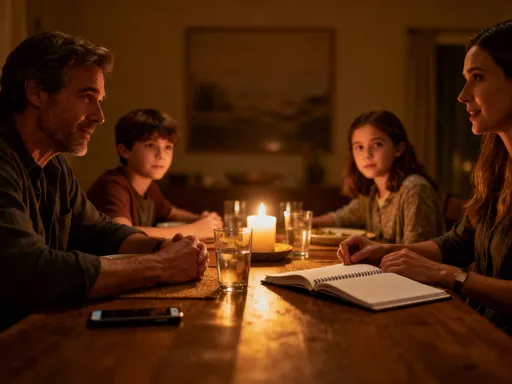
We all share travel highlights—those glossy photos of sunsets and landmarks. But real connection happens when we share the messy, human parts. When I started reading my journal entries aloud to my family—just during a quiet evening, with tea and cookies—something beautiful happened. My kids remembered things I’d forgotten. My husband said, “I didn’t know that moment meant so much to you.”
Instead of saying, “The trip was great,” I could say, “I felt so proud when we found that little beach on our own,” or “I loved watching you try the octopus, even though you hated it.” These weren’t just memories. They were invitations to connect. I began sharing a few entries with close friends, too—not as posts, but as messages. “Remember when we got lost in Barcelona? I found my note from that day. We were frustrated, but now I see how much fun we had laughing about it.” They’d write back with their own memories, and suddenly, the trip lived on in conversation.
This practice didn’t just preserve my memories. It deepened my relationships. It reminded me that travel isn’t just about the places. It’s about the people we’re with and the stories we build together. And when we share from a place of honesty—not just the perfect shots, but the real feelings—we give others permission to do the same. It turns a personal record into a shared treasure.
Your Travel, Your Growth Story
Looking back, I see my trips not as isolated escapes, but as chapters in a larger story—one about becoming more present, more curious, more myself. The Colosseum is impressive, but what stays with me is how small I felt standing in it, and how that smallness made me grateful. The view from Santorini is stunning, but what I cherish is the quiet moment I sat with my thoughts, sipping coffee as the sun rose.
What started as a simple fix for forgotten moments became a practice of self-awareness. Each entry, each voice memo, each shared story became a stitch in the fabric of who I am. And the best part? It didn’t require expensive gear or hours of work. Just a few minutes a day and a willingness to be present.
If you’ve ever felt like your trips disappear too fast, know this: it’s not your memory that’s failing. It’s the system. You don’t need to be a tech expert or a perfect journaler. You just need a way to capture the feeling, not just the facts. Start small. One sentence a day. One voice memo after dinner. Let the technology serve you, not control you.
Because your travels aren’t just vacations. They’re moments of growth, joy, and connection. And they deserve to be remembered—not just as images, but as part of your story. You’re not just going places. You’re becoming someone. And that story? It’s worth keeping.