From Chaos to Calm: The App That Finally Made Family Life Feel Light Again
You know that constant hum of stress—juggling grocery lists, school pickups, dinner plans, and your mom’s doctor appointments? I lived in that noise too. Then one ordinary Tuesday, a simple tap changed everything. No hype, no overload—just a tool that quietly sorted our family’s chaos into clarity. It didn’t replace us. It helped us be us—more present, less panicked. This isn’t about tech. It’s about breathing again. And if you’ve ever stood in the grocery aisle, staring at a crumpled note wondering whether you needed almond milk or oat, while your phone buzzes with a missed call from the school nurse, you already know this story.
The Breaking Point: When Family Logistics Became Unbearable
It wasn’t one big crisis. It was the thousand tiny cuts of daily life piling up until I couldn’t see straight. I remember standing in the kitchen one rainy Wednesday, sticky notes plastered to the fridge like a mad scientist’s experiment—pink for doctor visits, yellow for school forms, blue for grocery items I’d already forgotten. My phone rang—again—and it was the sitter asking if I’d confirmed the pickup time for my youngest. I had. Or thought I had. But somewhere between dropping the older two at soccer and answering an email for a volunteer committee I’d accidentally joined, it had slipped through the cracks.
I hung up, hands shaking slightly, and leaned against the counter. My daughter asked if dinner was ready. I looked at the clock. It wasn’t even 5 PM. I felt like I’d already run a marathon. That moment wasn’t unique. It was familiar to so many of us—the mental load that never clocks out, the invisible labor of remembering everything so everyone else can just live. I wasn’t failing because I was disorganized. I was drowning because I was trying to hold it all in my head, like a human hard drive with no backup.
The guilt was the worst part. If I forgot something, it felt personal. Like I wasn’t trying hard enough. Like I wasn’t enough. My husband meant well, but he’d say, ‘Just tell me what to do,’ not realizing that the burden wasn’t just in doing—it was in knowing what needed to be done in the first place. I was the family’s unofficial project manager, and I was burning out. Something had to change, not because I wanted to be more efficient, but because I wanted to be more present. I wanted to look up from the to-do list and actually see my kids, my partner, my life—without the constant static of worry in the background.
Discovering the Quiet Helper: How a Simple App Entered Our Lives
I wasn’t looking for a miracle. I was just desperate. My sister texted me one evening: ‘Have you tried that family organizer app everyone’s using? The one that looks like a notebook?’ I almost didn’t download it. Another app? Really? My phone was already cluttered with tools I’d tried and abandoned—meal planners that required too much input, calendar apps that synced wrong, reminder systems that buzzed at 3 AM for a dentist appointment two weeks away. I expected this to be the same: flashy, complicated, more work than it was worth.
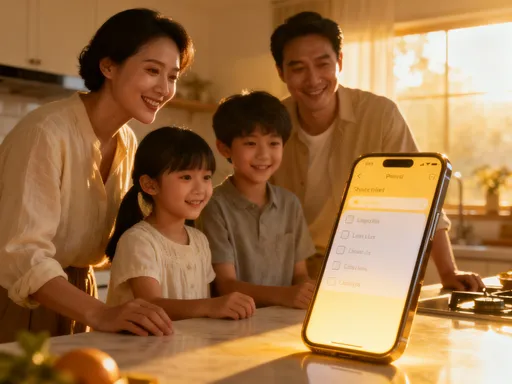
But from the first tap, it felt different. The screen was clean. No rainbow colors, no cartoon characters, no badges or levels. Just a calm white background with soft gray text. I created a family group in under a minute. Added my husband, my two teens, my mom. No confusing permissions, no ten-step tutorial. It just… worked. I made a grocery list—milk, bread, apples, dish soap. Then I hit ‘share.’
Later that day, I was folding laundry when I saw the notification: ‘Milk – checked off by Mark.’ My husband. At work. He’d seen the list, bought the milk, and marked it done—without me having to text, call, or remind. I stood there, holding a towel, and almost cried. It wasn’t about the milk. It was about the moment I realized I wasn’t alone in the load anymore. That tiny checkmark was a whisper: You don’t have to carry this all by yourself. That night, for the first time in weeks, I didn’t open three different notes apps before bed. I slept better. Not because the list was done, but because I knew it was shared.
Beyond Lists: How Shared Tasks Became Emotional Relief
What surprised me most wasn’t how much we got done—it was how much lighter we felt. We started using the task feature for chores: ‘Take out trash,’ ‘Feed the dog,’ ‘Call dentist to confirm appointment.’ I’ll admit, I was skeptical about getting my teenagers involved. My son, Jake, rolled his eyes when I asked him to join. ‘Mom, I’m not your assistant,’ he said. But I didn’t make it about obedience. I made it about contribution. ‘It’s not about me telling you what to do,’ I said. ‘It’s about us being a team. And when you mark something done, I see it. I know you did it. That matters to me.’
A few days later, I opened the app and saw ‘Take out trash – done by Jake.’ No nagging. No follow-up text. Just a simple check. And you know what? I didn’t take it for granted. I said, ‘Hey, thanks for taking out the trash. I saw it in the app.’ His face lit up. ‘Oh, you noticed?’ That moment hit me hard. This wasn’t just about getting chores done. It was about being seen. About feeling trusted. About knowing your effort wasn’t invisible.
For me, the emotional relief was profound. I stopped the constant reminders—the ‘Don’t forget to…’ and ‘Did you…?’ that had turned our home into a minefield of tension. Now, if something needed doing, I added it to the list. If it got done, I saw it. If it didn’t, I could gently ask, ‘Hey, did you see the task about watering the plants?’ without the edge of frustration. The app didn’t eliminate responsibility. It removed the resentment. It turned nagging into acknowledgment. And in a house full of busy, emotional humans, that made all the difference.
One Tap, Many Lives: Coordinating Family Across Distances
Then came the real test: my mom. She lives two hours away, and keeping track of her appointments, medication times, and social events used to take three phone calls a week. I’d call, she’d forget what day it was, I’d repeat everything, and by the end, we were both tired. I was hesitant to add her to the app—would she think it was intrusive? Would she feel like I was monitoring her? But when I showed her how it worked, her eyes softened. ‘So I can see when my doctor visit is without you calling every day?’ she asked. ‘Yes,’ I said. ‘And if your schedule changes, you can update it, and I’ll see it right away.’
We added her medication schedule: blood pressure pill at 8 AM, vitamin D with lunch, arthritis cream at bedtime. She set her own reminders. And when her neighbor drove her to the cardiologist, she marked the visit as complete. I got a simple update: ‘Doctor appointment – done.’ No phone tag. No worry. Just peace.
But it wasn’t just practical. It became emotional glue. My nephew, who lives with my brother in another state, had his first piano recital. My brother added the event with a note: ‘Livestream link in details.’ We all got the invite. My mom put it on her calendar. I bought flowers to send. The app didn’t just tell us when it was—it made us feel like we were part of it. Distance didn’t mean disconnection. And when my brother posted a photo in the event thread—my nephew in a tiny suit, grinning at the camera—we all reacted with hearts and clapping hands. It wasn’t social media. It was family. Quiet, private, full of love. The technology didn’t shout. It held space for us to care, gently and consistently.
Design That Gets It: Why Simplicity Won Our Trust
I’ve tried other apps—ones that turned task management into a game, with points, badges, and daily streaks. I lasted three days. The pressure to ‘keep the streak alive’ felt like another chore. I didn’t want to earn a digital trophy for doing the laundry. I wanted to do the laundry and forget about it. This app understood that. There are no points. No leaderboards. No cheerful voice saying, ‘Great job!’ when I mark something done. And I love that. It doesn’t pat me on the back. It just works.
The design is quiet on purpose. Notifications are minimal—only for things I’ve chosen to be reminded of. I can edit a task from my watch while helping my daughter with homework. My husband updates the grocery list from his phone during his lunch break. My mom checks her schedule on her tablet with her morning coffee. It syncs across devices without fuss. No manual refresh, no ‘sync failed’ messages. It just knows.
And when I make a mistake—like adding ‘buy birthday cake’ the day after the party—the app doesn’t scold me. I delete it, and it’s gone. No guilt. No penalty. It’s built for real life, where plans change, people forget, and perfection isn’t the goal. The interface is so simple that my 15-year-old and my 75-year-old use it the same way. That’s rare. Most tech forces us to adapt to it. This one adapts to us. It’s not trying to impress. It’s trying to help. And in a world full of noisy, demanding apps, that quiet humility is revolutionary.
Privacy Without Panic: Keeping Family Data Safe and Close
Of course, I had concerns. What if someone saw something they shouldn’t? What if my son’s school schedule ended up in the wrong hands? What if my mom’s health details were exposed? I did my research. The app uses end-to-end encryption, which means only the people in our family group can see what we share. Not the company. Not hackers. Not even the developers. It’s like having a locked drawer in the kitchen—only those with the key can open it.
We set up permissions carefully. My mom only sees event invites and her medication reminders. She doesn’t see my work meetings or my daughter’s dentist appointments. My teens can control which reminders they get and how they’re notified. No one feels watched. Everyone feels respected. When my son got his first job, he added his work schedule himself. ‘I’ve got this,’ he said. And I believed him. The app didn’t create distrust—it built trust. Because we could choose what to share, and how, we were more willing to share at all.
There’s no data mining. No ads. No selling our habits to third parties. The company makes money through a simple subscription—no hidden fees, no surprise charges. That transparency matters. I’m not trading my family’s privacy for convenience. I’m paying for peace of mind. And in today’s world, that’s worth every penny. Knowing our information is safe allows us to use the app fully, openly, without fear. It’s not just a tool. It’s a trusted space.
More Than an App: How Less Tech Made Us Feel More Connected
Here’s the thing I never expected: the more we used this app, the less we talked about it. It faded into the background of our lives, like the refrigerator or the family calendar on the wall. And that’s when I realized its true power. It wasn’t about the features. It wasn’t about the checkmarks or the notifications. It was about what happened when the noise stopped.
Dinners became calmer. No more ‘Who’s picking up what?’ or ‘Did you call the vet?’ We just… lived. I started noticing little things—my daughter’s new haircut, my husband’s tired smile after a long day, the way my mom laughed at a silly meme I shared in the family thread. The app didn’t replace conversation. It made room for better ones. Instead of talking about logistics, we talked about feelings. Hopes. Dreams. What we were grateful for.
And when I look back, I don’t remember the app. I remember the quiet. The deep breath after years of holding it. The feeling of my family not as a series of tasks, but as a circle of care. We’re still busy. Life still happens. But now, we face it together—lighter, calmer, more connected. The best technology, it turns out, isn’t the one that dazzles us. It’s the one that disappears, leaving behind something far more valuable: the space to be human. To love. To breathe. And for that, I’ll be forever grateful.