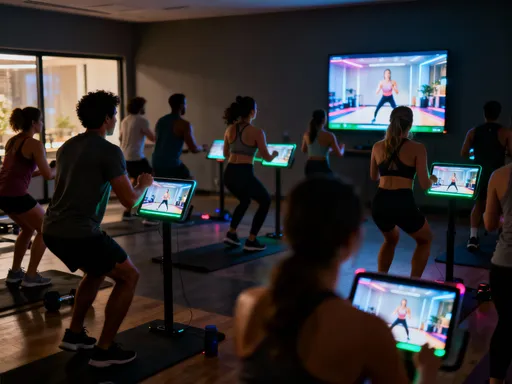
Tired of Feeling Alone in Your Online Workouts? Here’s How Fitness Communities Keep You Motivated
You start a new online fitness course with energy, but after a few days, the excitement fades. You miss the high-fives, the shared grunts, the knowing glances with someone pushing through the same burn. It’s just you, your screen, and silence. That isolation can kill motivation fast. But what if your workout wasn’t just a video, but a shared experience? Many are discovering that the real game-changer isn’t the instructor—it’s the people right beside you, virtually. I remember logging off one evening after a solid 40-minute session, heart still pounding, only to hear the quiet hum of my apartment. No one saw it. No one knew I’d just finished something hard. That moment hit me—this wasn’t sustainable. I needed more than movement. I needed connection. And guess what? The tech world finally caught on.
The Loneliness of Solo Streaming
Let’s be honest—starting an online fitness journey feels empowering. You pick a program, set your mat, press play, and for the first few days, it’s all fresh energy and good intentions. But then life happens. The kids need snacks. The dog barks mid-plank. And by day six, you’re skipping sessions not because you’re too tired, but because you don’t feel like anyone would notice. That’s the invisible cost of going it alone: no accountability, no encouragement, no shared struggle. It’s easy to forget that fitness isn’t just about physical effort—it’s emotional too. When you’re grinding through the last set of squats and there’s no one to nod at you, no one to say, “You’ve got this,” it’s harder to keep going. I’ve talked to so many women who told me the same thing: “I could do the moves. I just couldn’t do the silence.”
And that silence isn’t just empty air—it’s a psychological gap. In a live class, even a simple glance at someone else sweating beside you creates a sense of shared purpose. That subtle energy transfer keeps you going when your muscles scream to stop. But in solo streaming, that feedback loop disappears. You don’t get the rhythm of synchronized breathing, the collective exhale during a stretch, or the quiet pride in a room full of people who just survived the same challenge. What’s left is just you and your inner critic, which, let’s be real, isn’t exactly the most encouraging workout partner. The result? Burnout. Disengagement. And, too often, quitting altogether.
What’s ironic is that most of us turned to online fitness for convenience, not loneliness. We wanted to fit movement into our busy lives—before school drop-off, during naptime, after dinner cleanup. But in solving one problem, we accidentally created another. We traded the gym’s energy for privacy, and somewhere along the way, we lost the human element that makes fitness stick. The good news? Technology is starting to bridge that gap—not by replacing real connection, but by making digital spaces feel more human.
When the Screen Becomes a Community
Imagine this: you’re halfway through a tough cardio block, and a message pops up—“Go, Sarah! You’re killing it!” It’s from someone named Lisa in Ohio, who’s taking the same class live. You’ve never met, but suddenly, you feel seen. That small moment of recognition gives you the boost to finish strong. This is what’s changing in online fitness—the shift from passive watching to active belonging. Platforms are no longer just video libraries; they’re becoming interactive spaces where people show up not just to move, but to connect.
It starts with simple features—live chat during workouts, real-time emoji reactions, or virtual high-fives that float across the screen. These aren’t flashy gimmicks; they’re emotional lifelines. When you see hearts, fire emojis, or even a few “You’ve got this!” messages from others in your class, it changes the experience. It’s no longer just you and the instructor. You’re part of something. I joined a live yoga session last month where, halfway through, the teacher said, “Let’s all send a breath to Maria—she’s celebrating 30 days of consistency today.” I didn’t know Maria, but I felt her win. That’s the power of design that puts people first.
Some platforms now include voice-enabled warm-ups, where you and a few others can join a pre-class audio circle to check in. Hearing someone say, “I’m exhausted but showing up anyway,” makes you feel less alone. These moments build trust. They turn strangers into familiar voices. And over time, that familiarity becomes motivation. One mom I spoke with told me she sticks with her routine not because of the workouts, but because “my people” would miss her if she didn’t show up. That’s the shift—from “I should do this” to “my community is waiting.”
The Power of Shared Goals and Progress
Motivation thrives on visibility. When you can see your progress—and when others can see it too—it becomes real. That’s why fitness communities built around shared goals are so powerful. Think about a 30-day core challenge or a postpartum strength circle. These aren’t just workouts; they’re journeys with milestones, and you’re not walking them alone. You sign up, post your first update, and someone comments, “Can’t wait to grow stronger with you!” That tiny interaction creates emotional investment.
Platforms that allow progress tracking with photo updates, journal entries, or milestone badges make it easy to celebrate small wins. And when those wins are shared, they multiply. I’ll never forget the first time I posted a “Day 10” update and got messages from three women I’d never met: “You’re glowing!” “Your form is so strong!” “Keep going!” It wasn’t just encouragement—it felt like being handed a cup of tea after a long day. Warm. Nourishing. Exactly what I needed.
What’s beautiful is that these communities often form around life stages or specific needs—new moms, empty nesters, women managing joint pain, or those rebuilding strength after surgery. When you’re in a group that truly understands your journey, the support feels deeper. You’re not just doing squats; you’re healing, rebuilding, reclaiming your energy. And when someone posts, “I did my first full class without stopping!” or “Today I lifted what I couldn’t six weeks ago,” it’s not just a personal win—it’s a group victory. The tech here is simple: forums, progress boards, comment threads. But the impact? Life-changing.
From Strangers to Sweat Partners
There’s a moment—hard to predict but deeply felt—when a digital connection becomes real. For me, it was when someone texted me before class: “Just wanted to say hi—haven’t seen you in a few days. Everything okay?” That message wasn’t from a family member or a close friend. It was from Jen, a woman I’d only “met” in a fitness chat group. But in that moment, she felt like family. That’s the magic of deeper community features: they turn passive participants into active supporters.
Some platforms now offer small-group video check-ins—three to five people meeting weekly to share goals, challenges, and wins. These aren’t performances; they’re real conversations. “I’m struggling with motivation.” “I had a setback this week.” “I finally wore jeans that fit!” These moments build trust. And trust leads to accountability. When you know your group is expecting your update, you’re more likely to show up—even on the hard days.
Buddy matching is another game-changer. You’re paired with someone based on your goals, time zone, or energy level. You message each other before class, celebrate milestones, and even send voice notes. Some women have told me they’ve built friendships that go beyond fitness—they share recipes, parenting tips, even vent about work. One woman said her fitness buddy helped her through a tough divorce, not with therapy, but with consistency: “She made sure I showed up, even when I didn’t want to.” That’s the power of human-centered design—technology that doesn’t just track reps, but supports relationships.
How Design Shapes Connection
Not all fitness platforms are created equal when it comes to community. Some still feel like digital warehouses—videos lined up in rows, no interaction, no life. But the best ones are designed with connection in mind. Think live polls during class: “How are you feeling today? Tired, strong, or somewhere in between?” Your answer shows up on screen, and suddenly, you see that 60% of the room is also feeling tired. You’re not broken. You’re normal. That simple feature reduces isolation.
Or consider instructor shout-outs—when the trainer reads names from the live feed and says, “Welcome back, Angela! So glad you’re here.” It takes two seconds, but it makes you feel seen. Or emoji reactions that appear on-screen during class—little hearts, fire, or flexed arms—floating beside your name. These aren’t distractions; they’re digital nods. They say, “I see you. I’m with you.”
Another powerful design choice? Showing participant names during live sessions. When you can see who else is in class, it builds familiarity. You start recognizing names—“Oh, there’s Mark. He’s always here at 6 a.m.”—and over time, that turns into connection. Some platforms even allow audio sharing during warm-ups, so you can hear each other breathe, stretch, and laugh. These aren’t high-tech solutions. They’re thoughtful ones. And they prove that community doesn’t require complexity—just intention.
Real Talk: What Actually Works
After talking to dozens of women and testing multiple platforms, I’ve learned what really keeps people coming back. First, live sessions with voice chat outperform pre-recorded ones—hands down. There’s something about hearing real voices, even if it’s just a quick “Good morning,” that builds presence. Second, small groups create deeper bonds than massive classes. In a room of 500, you’re a number. In a group of eight, you’re a person.
Third, personal check-ins matter more than fancy avatars or gamified levels. A simple “How are you today?” message from a coach or peer does more for motivation than any digital badge. Fourth, milestone recognition—like a “7-Day Streak” or “First Plank Hold” badge—gives you something to celebrate. And when that badge is shared with your group, it becomes meaningful.
One woman told me she stayed with her program because every Friday, the instructor shared a “Shout-Out Board” of member wins—big and small. “Seeing my name next to others made me feel like I belonged,” she said. Another said the turning point was when her group started a “No Perfect, Just Present” challenge—celebrating showing up, not performance. That mindset shift, supported by the platform’s culture, changed everything. It wasn’t about being the strongest or the fastest. It was about being consistent. Being seen. Being part of something.
Building Your Own Digital Fitness Tribe
So how do you find or create a community that feels like home? Start by choosing platforms that prioritize interaction. Look for live classes with chat, small-group options, and real coach engagement. Avoid those that feel robotic or transactional. Then, join a niche challenge—something specific to your goals, like “Core After Baby” or “Strength for Busy Moms.” These attract people who get your reality.
Next, take small, consistent actions. Comment on someone’s post. Share your own update, even if it’s just “Made it today!” Reach out to someone who’s been quiet: “Missed you in class—hope you’re okay.” These gestures build connection over time. You don’t need to be the most active or the most vocal. Just be present.
And if you can’t find the right group? Start one. Many platforms allow you to create private circles. Invite a few friends, or post in the community board: “Looking for women over 40 who want to build strength and support.” You’d be surprised how many are looking for the same thing. Technology gives you the tools, but it’s your effort—the comments, the messages, the check-ins—that turns a platform into a tribe.
Stronger Together, Even Online
The real strength of online fitness isn’t convenience—it’s connection. When technology is designed to support interaction, it doesn’t replace real community; it redefines it. These digital tribes offer motivation, accountability, and joy, proving that even through screens, we can grow stronger—together. I used to think I had to choose between flexibility and belonging. Now I know I don’t. My mat is still in my living room. But I’m not alone on it. There’s Sarah in Texas, Jen in Michigan, Maria in Florida—we’re miles apart, but we’re in this together. And that changes everything. Because when someone sees you, really sees you, even through a screen, you’re more likely to keep showing up—not just for your body, but for your heart. And that’s the kind of fitness that lasts.