I kept saying 'I’ll figure it out alone'—until my online mentor quietly changed everything
We’ve all been there—staring at our goals, full of hope, yet stuck in the same cycles. I believed I had to do it all myself, that asking for help was a sign of weakness. But when I finally tried online mentor guidance, it wasn’t about grand advice or overnight success. It was the small, consistent nudges—someone who showed up, remembered my progress, and gently kept me on track. That’s how real change began. For years, I wore my independence like a badge. If I could do it alone, I thought, I must be strong. But strength, I’ve learned, isn’t measured by how much you carry solo. It’s measured by knowing when to reach out—and having someone who’s ready to walk beside you.
The Myth of the Self-Made Person
Remember that New Year’s resolution you made last January? Maybe it was about eating better, learning a new skill, or finally organizing the kids’ photos. You started strong—bought the planner, downloaded the app, maybe even cleared out a corner of the living room for your ‘home office.’ But by March, the momentum faded. The planner gathered dust. The app sent daily reminders you kept ignoring. And that goal? Still out there, somewhere, like a distant mountain you’re supposed to climb alone.
That’s the myth we’ve been sold: that real growth happens in silence, in solitude, through sheer willpower. We’re told the ‘self-made’ person is the ideal—the one who doesn’t need help, who figures it out on their own. But here’s the truth no one talks about: that version of success is lonely. And more often than not, it doesn’t work. I used to believe that asking for help meant I’d failed. That if I couldn’t manage everything—work, family, personal goals—on my own, I wasn’t doing enough. I’d scroll through social media, seeing other women juggling it all with perfect hair and calm smiles, and wonder what was wrong with me.
But here’s what I’ve realized: those women aren’t doing it alone, either. Behind the scenes, there’s often a support system—a coach, a community, a quiet voice saying, ‘You’ve got this.’ The idea that we should handle everything independently isn’t just unrealistic; it’s exhausting. And it keeps us from the very thing that makes lasting change possible: connection. Because growth isn’t a solo journey. It’s something that happens in relationship—with others, with our goals, and with ourselves. When I finally let go of that ‘I’ll do it myself’ mindset, I wasn’t giving up. I was opening the door to something better.
How Online Mentorship Found Me—When I Wasn’t Looking
I didn’t sign up for mentorship because I was ready. I signed up because I was tired. Tired of starting over. Tired of feeling like I was the only one struggling to keep up. I found the program through a friend who mentioned she’d been working with someone online to improve her time management. ‘It’s not a coach,’ she said. ‘It’s more like… someone who helps you stay on track.’ That sounded doable. Low pressure. No judgment.
So I clicked ‘join’ on a Sunday night, half-expecting it to be another app that would collect digital dust. I filled out a short form about my goals—mostly around creating a routine that included time for myself, not just everyone else. A few days later, I got an email: ‘Hi, I’m Sarah, your mentor. I’ve reviewed your goals, and I’d love to learn more about what you’re hoping to create.’
That first message hit differently. It wasn’t automated. It wasn’t generic. Someone had actually read what I wrote. We scheduled a short video call. Sarah didn’t come in with a five-step plan or a list of things I was doing wrong. She asked questions: ‘What does a good day look like for you?’ ‘When do you feel most energized?’ ‘What’s one small thing you’d love to start doing?’ Just being heard—really heard—felt like a gift. And when she said, ‘I’ll check in next week to see how it went,’ something shifted. I wasn’t just setting a goal anymore. I was accountable to someone who cared.
That sense of being seen made all the difference. For the first time in years, I didn’t feel like I was failing because I hadn’t done it all. I felt like I was starting something—with support. And that changed everything.
The Real Magic: Small Habits, Not Big Promises
We’re taught to go big or go home. Lose 20 pounds. Learn Spanish in 30 days. Build a six-figure side hustle. But real change? It doesn’t start with grand gestures. It starts with showing up, again and again, in small ways. That’s where my mentor, Sarah, got it right. She didn’t ask me to overhaul my life. She asked me to commit to ten minutes a day.
‘What’s one thing you can do in ten minutes that would make you feel more like yourself?’ she asked. I thought about it. Journaling? Maybe. A short walk? Yes. Stretching before bed? That could work. We picked one—writing three things I was grateful for each morning. Simple. Doable. Not life-changing on its own. But here’s the thing: because Sarah would check in, I did it. Even on busy mornings, I’d grab my notebook and scribble a few lines. ‘Coffee tasted good.’ ‘Daughter laughed at breakfast.’ ‘Sun came through the window.’
And every week, when Sarah asked, ‘How’s the gratitude practice going?’ I had something to share. Sometimes it was hard. Sometimes I forgot. But she never made me feel bad. Instead, she’d say, ‘It’s okay. What would make it easier to remember?’ That kind of support—gentle, consistent, kind—built a habit that stuck. Over time, those ten minutes turned into twenty. Then thirty. I started adding other small things: five minutes of deep breathing, a daily walk, planning my meals on Sunday nights.
The magic wasn’t in any one action. It was in the rhythm. The knowing that someone was paying attention. That I wasn’t just doing this for no one. Those small habits became anchors—tiny moments of intention that pulled me back to myself, day after day. And slowly, without even realizing it, I began to feel more grounded. More like the person I wanted to be.
Technology That Feels Human
When I first heard ‘online mentorship,’ I pictured robots. Automated messages. Cold, clinical check-ins. But what I found was the opposite. The platform we used wasn’t flashy. No bells, no whistles. But it was thoughtful. Messages from Sarah came through the app, but they never felt like spam. They felt like notes from a friend.
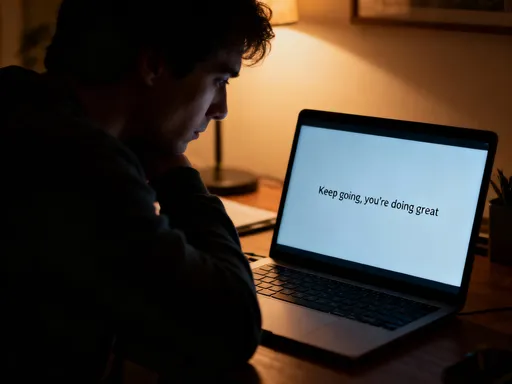
One morning, I opened my phone to a message: ‘Saw your journal entry from yesterday—so glad the walk helped clear your head. How’s your energy today?’ I smiled. She’d read what I’d shared. She remembered. Another time, after I mentioned I’d been feeling overwhelmed, I got a voice note: ‘Hey, no need to reply—just wanted you to know I’m here. You’re doing great.’ That voice note played on loop in my mind for days. It wasn’t just the words. It was the tone. Warm. Present. Human.
The technology didn’t replace connection—it protected it. Automated reminders nudged me to log my progress, but they came with personal notes. Weekly summaries showed my growth, not just as data points, but as a story: ‘You’ve journaled 18 days in a row—celebrate that!’ The app didn’t track perfection. It celebrated effort. And because everything was in one place—our messages, my notes, my progress—I could see how far I’d come, even on days when I felt stuck.
What made it work was the balance. The tech handled the logistics—scheduling, reminders, storage—so Sarah could focus on what mattered: being present. She didn’t have to dig through emails or guess where I was. She could show up, fully, every time. And that made all the difference. Because when support feels personal, it becomes powerful.
When Life Gets Busy—And the Mentor Still Shows Up
Then came the week everything fell apart. My youngest got sick. Work deadlines piled up. The house was a mess. I didn’t journal. I skipped my walks. I stopped replying to messages. I felt like I’d failed—again. And I braced myself for the guilt, the disappointment, the ‘You said you’d try’ lecture.
But it never came. Instead, I got a simple message: ‘No need to reply. Just checking in. Hope you’re okay.’ That was it. No pressure. No judgment. Just care. And somehow, that small act of consistency—her showing up, even when I wasn’t—kept the thread alive.
A few days later, when things calmed down, I wrote back: ‘Sorry I disappeared. It was rough.’ Her reply? ‘You don’t need to apologize. Life happens. What matters is that you’re still here.’ Those words lifted a weight I didn’t even know I was carrying. Because in that moment, I realized this wasn’t about perfection. It was about continuity. It was about having someone who wouldn’t walk away when things got hard.
That reliability became my anchor. Knowing Sarah would check in—rain or shine, busy or calm—gave me a sense of stability I hadn’t felt in years. It wasn’t that she fixed my problems. She didn’t have to. She just stayed connected. And that made it easier to come back, even after a setback. Over time, I learned to extend that same grace to myself. Missing a day didn’t mean I’d failed. It just meant I was human. And as long as I kept showing up—even imperfectly—I was moving forward.
The Ripple Effect: Confidence, Clarity, and Calmer Days
Months passed. I kept journaling. I kept walking. I kept showing up for our calls. And something unexpected happened: the benefits started spilling over into other parts of my life. I felt calmer. More focused. More in control.
At first, it was small. I started saying ‘no’ to things that drained me. I planned meals ahead of time, which saved time and stress. I even signed up for a local art class—something I’d been too nervous to try before. Each step felt manageable because I wasn’t doing it alone. I’d run ideas by Sarah: ‘What do you think about taking this class?’ ‘How can I make time for it?’ She didn’t tell me what to do. She helped me trust my own voice.
That’s when I noticed the real shift: my confidence was growing. Not the loud, flashy kind. The quiet kind. The kind that says, ‘I can figure this out.’ I made decisions faster. I worried less about getting it wrong. I started believing in my ability to handle challenges—not because I had all the answers, but because I knew I could find support when I needed it.
My family noticed, too. ‘You seem lighter,’ my husband said one evening. My daughter asked, ‘Why are you smiling so much?’ I realized I wasn’t just managing my life anymore. I was enjoying it. The constant background hum of anxiety had softened. I wasn’t waiting for the other shoe to drop. I was present. And that presence made me a better mom, a better partner, a better friend.
All of this—this calm, this clarity, this growing sense of self—started with ten minutes a day and someone who showed up. It wasn’t a miracle. It was consistency. It was connection. And it proved that real growth doesn’t have to be loud to be powerful.
Why This Isn’t Just Another App—It’s a Relationship That Works
Let’s be honest: we’ve all downloaded apps that promised to change our lives. Most of them end up deleted. Why? Because tools alone don’t create change. People do. What made this different wasn’t the platform, the features, or the design—though those helped. What made it work was the relationship. It was Sarah remembering my daughter’s recital. It was her celebrating my 30-day journal streak. It was her staying connected when I disappeared.
This wasn’t about dependency. It was about partnership. A shared commitment to my growth. And because the technology was designed to support that connection—not replace it—the guidance felt close, even from miles away. It wasn’t a chatbot asking, ‘Did you meditate today?’ It was a real person saying, ‘I noticed you’ve been quiet—how are you really doing?’
And here’s the most beautiful part: this kind of support isn’t reserved for the wealthy or the elite. It’s accessible. It’s flexible. It fits into real lives—messy, busy, beautiful lives. You don’t have to have it all together to begin. You just have to be willing to show up, and let someone walk beside you.
So if you’ve been telling yourself, ‘I’ll figure it out alone,’ I get it. I did too. But I’ve learned that strength isn’t in carrying the load by yourself. It’s in knowing when to reach out. Real change doesn’t happen in isolation. It happens in the quiet moments of connection—in a message, a call, a shared belief that you’re worth the effort.
You don’t have to do it all. You don’t have to be perfect. You just have to take one small step—and let someone help you take the next. Because when you’re not alone, growth isn’t just possible. It becomes natural. And that? That changes everything.