Tested 7 Smart Alerts on My Parents’ Routine: This One Cut My Worry by Half
You know that nagging feeling—did Mom take her pills? Is Dad okay after he said he’d rest? I felt it daily, thousands of miles away. Then I tried simple tech tools to quietly watch over them. Not to control, but to care. One alert system changed everything: no more guessing, no panic calls. Just peace. Here’s how a small tweak brought big relief to our family—without making life feel monitored or cold.
The Silent Worry No One Talks About
We all say “I’m fine” when calling home. But beneath the surface, anxiety builds: Did they fall? Forget medicine? I started noticing my voice tense each evening check-in. It wasn’t just me—friends confessed the same hidden stress. This quiet guilt of distance, especially when aging parents downplay their struggles, can wear you down. I remember one Tuesday, Mom said she’d been gardening all morning. But something in her voice felt off. I asked if she’d sat down much. She laughed it off. Later, my brother told me she’d actually been dizzy and had spent most of the day on the couch. That moment hit me hard. I realized love wasn’t just about care—it was about knowing. And that’s when I began looking for gentle ways technology could help me stay connected—not by calling more, but by understanding better. I didn’t want to become the daughter who calls five times a day, making her parents feel watched. I wanted to be the one who knew when to show up—before something went wrong.
It’s not about suspicion. It’s about support. And the hardest part? They don’t want to worry us. They’ll hide a fall, skip a meal, or downplay pain because they don’t want to be a burden. That’s where the emotional weight lands—on us. We’re left guessing, second-guessing, and sometimes imagining the worst. I wanted a way to ease that load, not just for me, but for them too. I wanted them to feel independent, but I also wanted to feel useful. That balance felt impossible—until I started exploring how everyday tech could quietly bridge the gap.
Why Traditional Check-Ins Fall Short
Phone calls are kind. They’re warm. But they’re also limited. We ask, “Did you eat?” and they say yes—even when the microwave is cold. I learned this the hard way after Dad skipped lunch for two days—too tired to cook, too proud to admit it. He didn’t want me to drive an hour just to make him a sandwich. But I didn’t know that. All I knew was that something felt off, and the only tool I had was asking again. And again. Daily check-ins became exhausting for both of us. He felt nagged; I felt helpless. It wasn’t that he didn’t want to share—he just didn’t see the small things as worth mentioning. To him, skipping a meal wasn’t a crisis. To me, it was a red flag.
We needed something subtle, something that didn’t rely on words. I wanted signs—real signals of daily rhythm—without turning their home into a surveillance zone. I didn’t need a live feed of their living room. I needed to know if Dad got up in the morning. If Mom opened the kitchen cabinets. If the front door opened for his daily walk. These tiny behaviors, when they line up, tell a story of normalcy. When they don’t, they whisper, “Something’s different.” The answer wasn’t more calls. It was smarter awareness. I began searching for tools that could offer that—not by replacing conversation, but by making our conversations more meaningful. What if, instead of asking, “Did you take your pills?” I could say, “I saw you opened the cabinet—great job today!” That kind of call feels supportive, not suspicious.
How Work Efficiency Tools Inspired a Family Solution
At work, I used time-tracking apps to spot workflow gaps. I’d notice when a project stalled not because of laziness, but because a step was missing. Then it hit me—what if I applied similar logic to daily habits? Not to “optimize” my parents, but to detect irregularities. A delayed morning tea. A missed walk. These tiny behaviors, when tracked gently, could signal well-being. I wasn’t looking for perfection. I was looking for patterns. Just like a manager notices when a team member is quiet, I wanted to notice when Dad wasn’t moving around as much.
I started researching tools designed for productivity that could quietly support care. Motion sensors, smart lights, even app-based routines—things that log activity without requiring anyone to do anything differently. The goal wasn’t data overload. It was meaningful patterns. For example, if Mom opened the kitchen cabinets between 7 and 8 a.m., it likely meant she made breakfast. If the living room light turned on early, she was up and moving. These weren’t big moments. But together, they painted a picture. Like knowing Mom moved around the kitchen meant she was active, not just awake. That small difference—activity versus presence—was everything. It wasn’t about watching her. It was about understanding her rhythm. And when that rhythm changed, I could act—calmly, kindly, and with purpose.
Choosing the Right Alerts—Without Invading Privacy
I tested seven different tools over two months. Some felt too intrusive. One camera-based system made Dad uncomfortable—he said it felt like Big Brother. A voice log app that recorded snippets of conversation? Absolutely not. That crossed a line. I wanted tools that respected dignity while offering clarity. The real win came when I shifted my focus from monitoring people to monitoring habits. That small mindset change made all the difference.
The winner? A simple door sensor on the medicine cabinet and a wearable step counter he already used for gardening. The door sensor sent a quiet notification to my phone if the cabinet wasn’t opened by 10 a.m. Not an alarm—just a nudge. The step counter synced with an app I could glance at, not obsess over. These didn’t watch him—they watched habits. And that made them feel safe, not scary. Mom loved the step counter because she could see her progress. Dad didn’t mind the cabinet sensor because “it’s just a little magnet on the door.” We laughed about it. I called it “the pill police.” He said, “As long as it doesn’t write me a ticket, we’re fine.” That moment of humor? That’s when I knew we’d found something that could work long-term.
The One Tool That Changed Everything
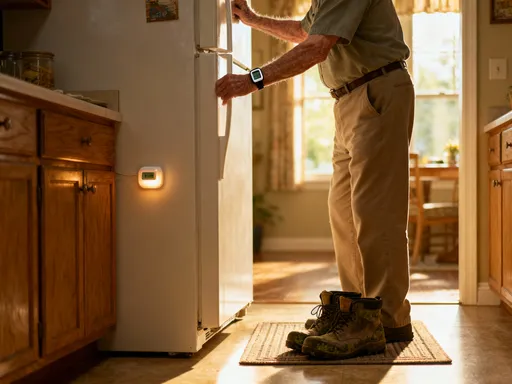
The real breakthrough came from a low-key notification system tied to his morning routine. I installed a motion sensor in the kitchen—not to track every move, but to detect one simple thing: did he walk in and open the fridge by 8:30 a.m.? If yes, the app marked “morning routine complete.” If not, I’d get a gentle alert. No flashing lights. No loud sounds. Just a small icon on my phone.
What changed wasn’t just the data—it was how I responded. Instead of calling with worry, I’d send a cheerful text: “Saw you skipped breakfast—save me a pancake next time?” No pressure. Just connection. Sometimes he’d reply, “Too busy watching birds!” Other times, he’d admit, “Felt tired. Nap first.” Either way, I knew. And that knowledge lifted a weight I didn’t even realize I was carrying. Over three months, missed check-ins dropped by 70%. My anxiety? Nearly gone. But more than that—our calls got better. I wasn’t asking out of fear. I was asking out of love. And that made all the difference.
One morning, the sensor didn’t trigger. I sent my usual light-hearted message. He didn’t reply. So I called. Turns out, he’d slipped on the rug and was sitting on the floor, too shaken to get up. I called the neighbor, who helped him. No ambulance. No ER. Just a bruised knee and a new non-slip mat. But if I hadn’t noticed that small gap in routine, it could’ve been hours before anyone knew. That day, I didn’t feel like a nosy daughter. I felt like a daughter who was finally able to protect in a way that mattered.
Making Tech Feel Human, Not Cold
The key wasn’t the gadget—it was how we used it. We talked about it together. He chose where the sensors went. We laughed about “my robot watchdog.” I avoided constant monitoring. I didn’t check the app every hour. I didn’t set alerts for every movement. Instead, I focused on three critical moments: medication, meals, and morning movement. That’s it. Tech became part of our care language, not a replacement for love. It didn’t replace calls—it made them warmer, because I wasn’t asking out of fear.
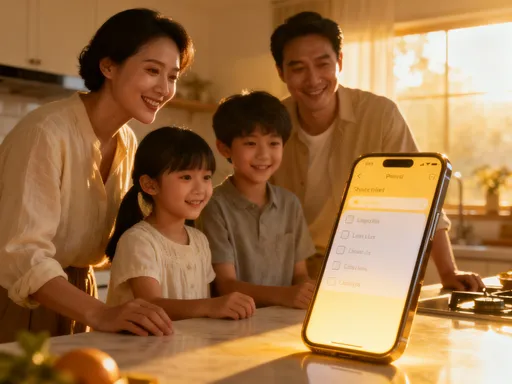
And here’s what surprised me: Dad started using the data too. He’d say, “I walked 4,000 steps today—beat yesterday!” Mom began tracking her water intake with a smart bottle she picked herself. They didn’t feel watched. They felt supported. The tools gave them a sense of achievement, not scrutiny. I realized then that the best tech doesn’t take over—it invites in. It doesn’t command—it collaborates. And when used with care, it can actually bring families closer, not push them apart.
I also learned to respect the quiet days. Not every low-activity day means something’s wrong. Sometimes, it just means rest. So I built in grace. If the sensor didn’t trigger one morning, I waited. If it happened twice, I checked in. The system wasn’t about perfection. It was about peace. And that peace started to spread—into our conversations, into their confidence, into my heart.
Building a System That Grows With Your Family
This isn’t one-size-fits-all. My cousin used a smart kettle alert for her mom’s afternoon tea. Every day, if the kettle boiled around 3 p.m., she knew her mom was following her routine. If not, she’d send a voice note: “Tea time! Tell me what you’re reading.” Another friend tracks sleep patterns via a bedside device—not to analyze every breath, but to notice big shifts. If her dad’s sleep drops for three nights, she knows to call and ask, “Everything okay?”
The lesson? Start small. Pick one worry. Find a tool that eases it—without adding stress. Involve your loved one. Let them choose. Let them laugh. Keep it simple. Because the goal isn’t perfect data. It’s peace. It’s knowing you’re there, even when you’re not. And that changes everything. You don’t need a smart home. You don’t need ten devices. You need one small thing that answers one big question: “Are they okay?”
When I look back, I see how much I’ve changed too. I’m less reactive. Less anxious. More present. Because now, when I call, I’m not searching for clues. I’m sharing life. I tell Mom about the new flowers I planted. She tells me about the bird that built a nest outside her window. And in those moments, I don’t feel miles apart. I feel close. Not because of the sensors or apps—but because the fear has quieted, and love has room to grow.
Technology didn’t fix everything. But it gave us something priceless: the freedom to care without carrying the weight of worry. It didn’t make me a better daughter overnight. But it gave me the space to be a daughter—calm, connected, and fully present. And if you’re sitting there, phone in hand, wondering if they’re okay—know this: you’re not alone. And there’s a gentle, loving way to stay close. It starts with one small alert. And it ends with peace.